

There is a particular kind of browsing that happens late at night on a phone. Someone has been on a dating app for a few months, the matches have slowed down, and they have started to suspect the photos are the problem. They are not ready to book a photographer. They are definitely not ready to ask a friend to take pictures of them in the park. So they search for AI dating photos, open three or four tabs, and start poking around.
Almost none of them intend to pay anything that night. They want to see what the results look like, whether the faces seem real, and whether a tool could plausibly produce something they would recognise as themselves. That quiet, noncommittal first visit decides far more than most reviews give it credit for.
The first five minutes are the real product
AI photo tools tend to be compared on output: how many photos, how many styles, how realistic the skin looks. Those things matter once someone has paid. But the person browsing at midnight never gets that far unless the first few minutes give them a reason to.
What they are really asking is simple. Will this look like me? Will it look fake? Is it going to cost more than I think? Can I get out if I hate it? A tool that answers those questions early keeps the visitor. A tool that hides them behind a signup wall and a card form usually loses them to the next tab.
This is why the word “free” does so much work in this category, and why it is worth being careful about what it actually means.

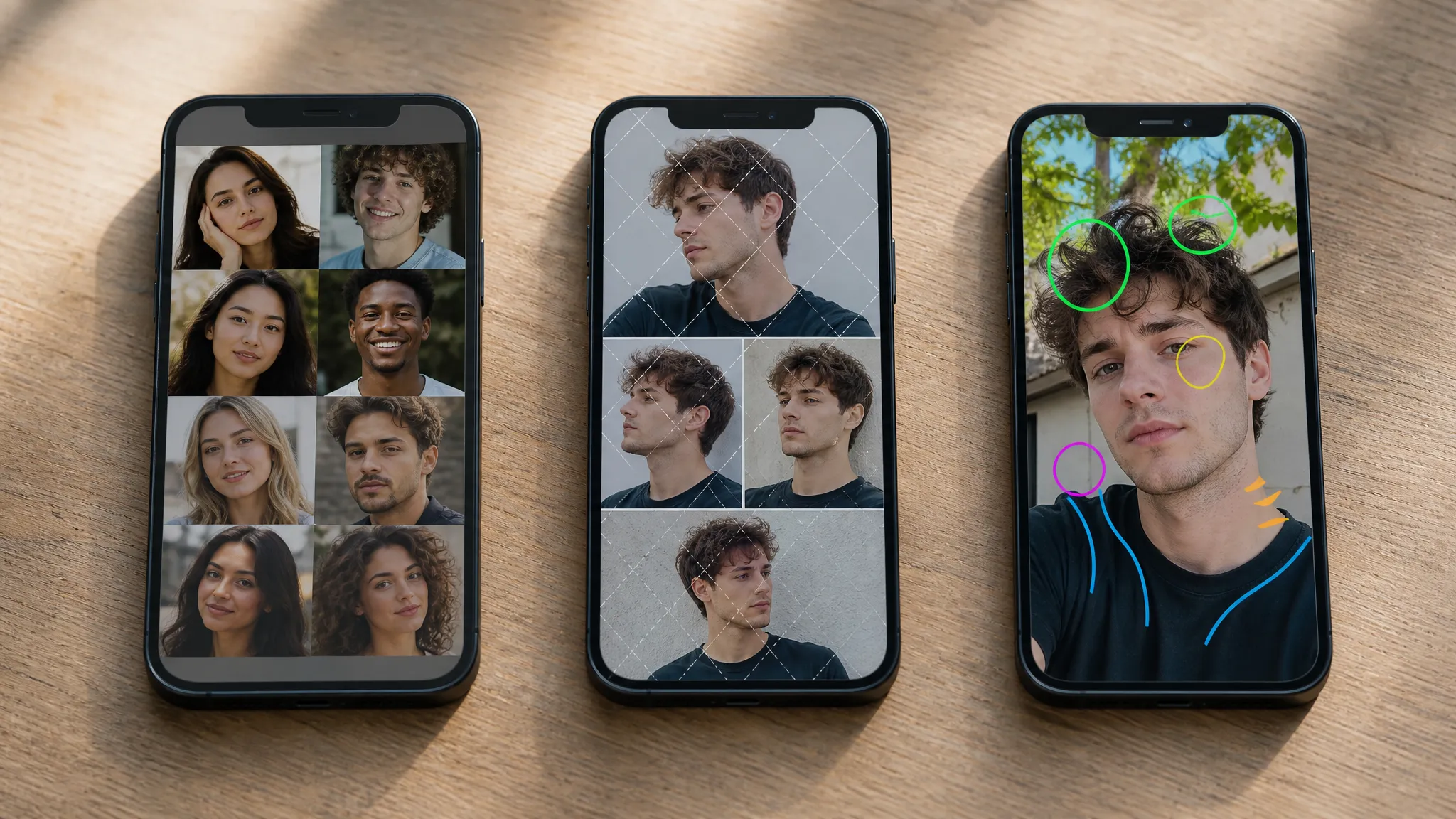
Three very different kinds of free
When a dating photo tool advertises something free, it usually means one of three things, and they are not equally useful to someone trying to decide.
The first is a gallery. You can browse example photos of other people. This tells you what the tool can do in ideal conditions, but nothing about what it will do with your face, your lighting and your slightly awkward selfies. It is marketing, not a trial.
The second is a small watermarked sample. You upload a few photos and get a handful of low-resolution or stamped results. This is closer to useful, because it is your face. The limitation is that small samples are often chosen to flatter, and a watermark across the middle makes it hard to judge the thing you actually care about, which is whether the photo would pass on an app.
The third is free analysis. Instead of generating images, the tool looks at the photos you already have and tells you something specific about them: which one reads as most natural, which ones look filtered or dated, what is missing from the set. This sounds less exciting than new pictures, but for a lot of people it is the most valuable first step, because it answers whether they need new photos at all.
What to actually check before paying
Once the browsing turns into serious interest, a few questions separate the tools that suit a cautious buyer from the ones that do not.
Pricing structure comes first. Many AI products run on subscriptions, which makes sense for tools you use every week and very little sense for a one-off set of dating photos. A one-time price means you know exactly what you are spending and nothing renews quietly in three months. It is worth reading the small print before entering card details.
Refunds come next. A tool that is confident in its output can afford a clear money-back window. One that buries its refund terms is telling you something about how often people ask for them.
Then there is realism. With AI dating photos, looking bad is rarely the real danger. Looking slightly too good, in a way other people pick up on, is. Some tools include a way to check how natural a photo reads before you upload it anywhere, which is a sensible safeguard whichever service you use.
Comparison articles do the heavy lifting
Because this is not a purchase most people discuss with friends, the research happens alone and mostly through search. People read side-by-side reviews, look at price tables and try to work out which tool matches their situation, whether that is a tight budget, a need for lots of variety or a strong preference for photos that stay close to reality.
A roundup of the best free ai dating profile generator options is a sensible place to start that kind of research, because it lays out what each tool gives away before payment and what it charges after. DatePhotos AI, which sits in that comparison, lets people check how natural their existing photos read before buying anything, then charges a single one-time price rather than a subscription for a full set, with a refund window if the results do not work out.
Whichever service someone chooses, the method is the same. Use the free part to learn something real about your own photos. Compare what the paid tiers include rather than what the landing page promises. And pick the option whose pricing you would still be comfortable with if the first batch turned out to be only partly usable.
Why the cautious buyer is the one worth designing for
There is a temptation in this market to design for the impulse buyer, the person who sees an impressive before-and-after and pays immediately. Those people exist, but they are a minority, and they are also the most likely to be disappointed and ask for their money back.
The larger group is cautious, private and a little embarrassed to be looking at all. They want to understand their options, test something low-risk and only then commit. Tools that respect that pace, with honest free options, clear one-time pricing and a real way to check realism, tend to earn their trust. Tools that rush them tend to lose them, often in the first five minutes, and usually without ever finding out why.
For anyone doing that late-night browsing, the takeaway is reassuring. You do not have to decide anything tonight. Look properly, test what is free, read a comparison or two, and only pay when you are confident the photos will still look like you.