I keep a small note on my phone that says, plainly, “check who’s actually batting before you send a WhatsApp voice message.” I wrote it during the fifth Test at The Oval in August 2025, after I sent a very confident opinion about a partnership that had, in fact, ended two overs earlier. Anyone who has followed India through a full summer of cricket in the last two seasons will recognise the feeling — the sport has not become harder to love, but it has become genuinely harder to keep up with. Between the drawn Anderson-Tendulkar Trophy in England, India’s ninth Asia Cup title in Dubai six weeks later, and the 19th IPL running from 28 March to 31 May 2026, the calendar has quietly turned into three simultaneous seasons.
Talking to friends across Bengaluru, Pune, Kochi and London over the last twelve months, I have noticed that most of us have quietly, almost accidentally, redesigned how we consume a matchday. Nobody sat down and decided to. It happened one WhatsApp group at a time. So I started keeping a rough field-notebook of the ways different fans in my circle now organise a game — where they sit, what they open, which tab wins when a wicket falls. Four patterns kept repeating, and they map surprisingly well onto four very different personalities of Indian cricket in 2026.
The tab I actually keep open when the innings breaks for drinks is a single, plain English reference page called cricketin, and it has replaced roughly four apps I used to juggle. That is the shortest possible summary of what changed. What follows is the longer, more honest one — told through the four fans who taught it to me.
The Second-Innings Analyst
The first friend in my sample is a software architect in Bengaluru who watches Tests the way some people watch chess. He mutes the broadcast for the entire first hour. Instead, he reads the pitch report on one tab and the day’s fixture note on another, and only unmutes when a bowler he cares about has the ball. What changed for him after the five-Test India tour of England in 2025, which ended 2-2 after Mohammed Siraj’s six-run heroics at The Oval, is how much of his prep now happens between sessions rather than before the toss. “During Old Trafford,” he told me, “I was doing three things at once. By The Oval I had cut it down to one tab and a notebook.”

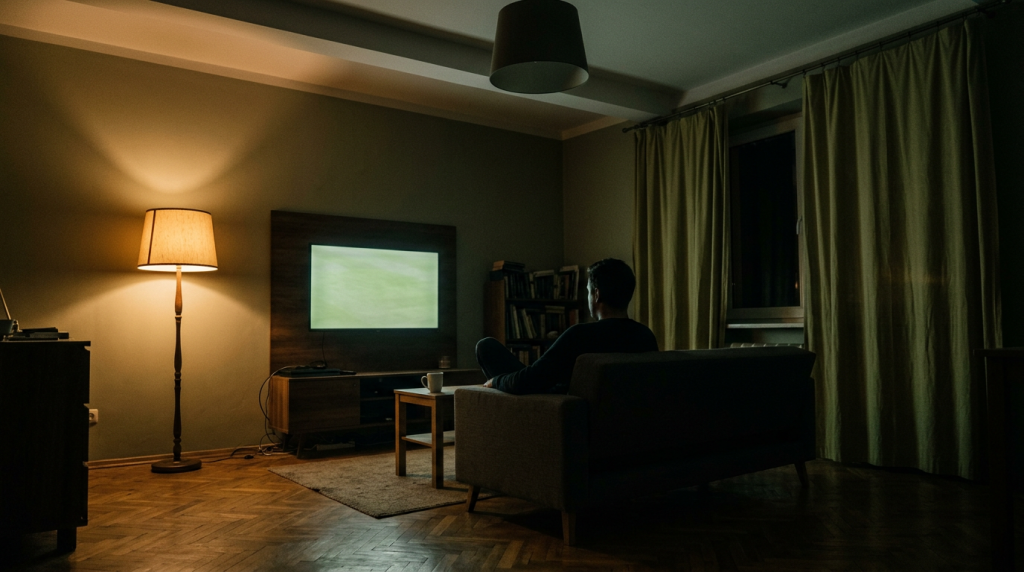
His routine is now almost embarrassingly minimal: one page for fixtures, one for form, one for the pitch. He is not reading less about the game than before; he is reading it in a more concentrated place. Many people I know have moved to something similar during 2026’s IPL — the tournament runs 74 matches across 13 venues between 28 March and 31 May, and even devoted analysts have accepted that the old method of tab-switching does not survive a double-header weekend.
The Fantasy-XI Commuter
The second archetype is a friend in Pune who spends ninety minutes on a Hinjewadi shuttle bus five mornings a week. Her cricket window is the commute, and it has to be dense. She checks the previous night’s short-form recaps, sets a fantasy XI, and closes everything before the bus arrives at her office. She does not watch live cricket during the working day — she reads about it, in the same way people used to skim the sports pages on a train.
What has changed for her in the last two seasons is the amount of context she has to load into a ninety-minute window. During the Asia Cup 2025 group stage she was following, in her words, “one live scorecard, one fantasy app, one WhatsApp group and one podcast, all before Sinhagad Road.” By the final on 28 September in Dubai — Tilak Varma’s 69 not out, India’s ninth Asia Cup crown — she had reduced the stack to two things: the highlights reel and one stats page. Everything else, she said, was noise dressed up as content.
A large share of Indian cricket viewing already lives on a phone screen wedged between other tasks. According to Lumikai’s FY24 India gaming and interactive-media report, roughly 591 million people in India engage with mobile-first interactive content, most of it in ten- to twenty-minute windows. Cricket, unusually for a five-day sport, has adapted to that rhythm.
The Diaspora Late-Night Streamer
The third fan lives in Reading and works UK office hours, which means his Indian cricket happens at an unforgiving latitude of the clock. A 7:30 PM IST toss is 3:00 PM his time — fine — but the IPL final on 31 May 2026 finished, for him, on a Sunday evening that bled into a Monday commute. His workaround is simple: he only tracks scores in real time when he cannot help it, and catches up the next morning through a curated stats page and one long-read column.
His argument is worth quoting closely: “I do not need six push notifications when I am asleep. I need one clean page in the morning that tells me the toss, the wickets, and the pitch story. Not five apps disagreeing with each other.” He is describing what has quietly become the default among Indian fans abroad — a single reference layer checked twice a day, rather than a stream checked twenty times. The BBC’s cricket desk plays a similar role for the Test format, but for the IPL and Asia Cup he wants something India-first and fixture-first.
The Family-Room Traditionalist
The last archetype in my notes is my aunt in Kochi, who has watched cricket in the same living room for thirty-two years. Her routine is deliberately old-fashioned: the broadcast is on, the volume is up, the phone is face-down on the arm of the sofa. She does not scroll during play. What she has added, in the last two years, is a single ritual — before every match, she reads one short pre-match note. That is all. She calls it “the almanack minute,” a nod to the paper Wisden volumes her father kept on the shelf.

Her insight ties the whole piece together. The problem in 2026 is not that there is too little cricket information for the Indian fan; it is that there is too much, and it arrives from too many angles. The four fans I have described have all quietly solved the same problem — they have each chosen exactly one authoritative layer for context and let the broadcast do the rest. Whether it is a notebook, a commuter tab, a diaspora morning page, or an almanack minute before the toss, the winning move in 2026 is the same: pick one reference, and trust it.
If you have found yourself opening five things during the last IPL and finishing none of them, you are not doing anything wrong. You are overdue for a redesign of your own matchday routine. Borrow whichever of the four habits above fits your life. The season is long, the calendar dense, and the honest reward of the last two years of Indian cricket has been rediscovering what a quiet, well-organised innings feels like from the sofa.