Many homes have a modest-sized dining table, and the table and chairs are not replaced very often. Yet the whole setting can feel different as soon as a dinnerware set is laid out. White Jade dinnerware gives morning bread and coffee a light, clean look. Green Jade brings a more relaxed feel to a weekend dinner with a wooden tabletop and home-cooked food. When the family gathers or sits down for a holiday meal, the warm tone of Yellow Jade makes the table feel livelier. Green Jade, Yellow Jade, and White Jade opal glass dinnerware can each create a different mood in the same home. This article looks at table materials, tablecloth colors, food pairings, and real household dining occasions to explain where each color works best and how to arrange it for everyday meals that feel more comfortable and thoughtfully prepared.
What Types of Tables Suit Green Jade, Yellow Jade, and White Jade Dinnerware?
It is easy to form an opinion about dinnerware from a product photo alone. Once it is placed on a dining table at home, the result also depends on the tone of the wood, the color of the tablecloth, and the food being served that day. When manufacturers develop color samples, they also view the same dinnerware against white, natural wood, and dark backgrounds. A color can look different beside each background, which is why the table setting needs to be considered as a whole.
| Dinnerware Color | Main Impression on the Table | Best-Suited Setting |
|---|---|---|
| Green Jade | Natural, calm, and fresh | Wooden tabletops, beige tablecloths, and plant accents |
| Yellow Jade | Bright, warm, and lively | Light-colored tablecloths, warm lighting, and family gatherings |
| White Jade | Simple, clean, and easy to coordinate | Light or dark tabletops, plain tablecloths, and colorful dishes |
Green Jade Suits a Fresh, Natural Table
Green Jade dinnerware usually looks at home on a wooden dining table. The warmth of the wood grain supports the green tone, while a beige tablecloth connects the two colors. Add a small plant at the corner of the table or natural light from a nearby window, and Green Jade begins to look like a natural part of the setting rather than a bold accent that draws attention away from the food.
This color works especially well with everyday home cooking. Stir-fried vegetables, salads, bread, and even a simple bowl of soup sit comfortably beside Green Jade dinnerware. The table has color while still feeling calm. When the family sits down to eat, their eyes are not pulled back and forth by overly bright blocks of color, so the whole space feels more relaxed.
Three small details can help when arranging the table:
- If the wooden tabletop is very dark, choose a light beige tablecloth to make the edges of the Green Jade pieces easier to see.
- Keep the tablecloth soft in tone. Light gray, beige, and light brown are dependable options.
- Avoid crowding the table with decorations. Leaving room around the wood grain and the dinnerware creates a more comfortable setting.
For homes with a natural or wood-led interior, or for families who want an ordinary dinner to feel less formal, Green Jade is often an easy choice.
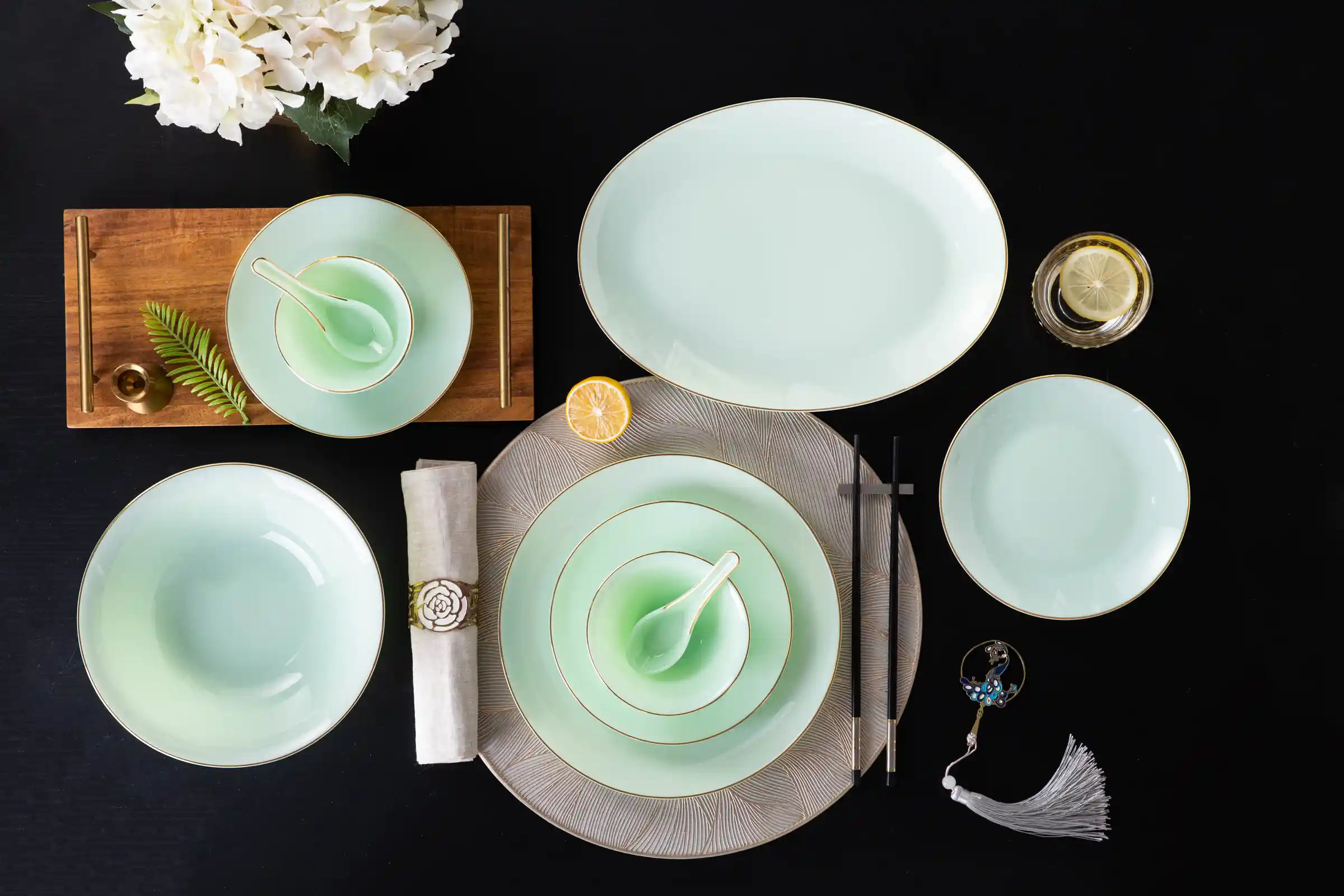
Yellow Jade Suits a Warm, Lively Table
Yellow Jade dinnerware naturally brings to mind a table with people gathered around it. On a weekend evening, with the lights on and several hot dishes just served, Yellow Jade adds warmth to a light-colored tablecloth. It suits family gatherings as well as ordinary dinners that call for a little more care in the presentation.
Yellow Jade works best against a clean background. A white, beige, or light gray tablecloth brings out its warm color and makes the table look brighter. Warm-toned foods such as roast meat, bread, pumpkin, or curry can echo the dinnerware, although every dish does not need to use a similar color. Keeping one or two white or green elements on the table gives the arrangement more depth.
A table set with Yellow Jade dinnerware usually needs very little additional decoration. A few plates, shared dishes, and warm lighting are enough to create the feeling of a gathering. This is especially practical in a smaller family dining area. The dinnerware contributes to the setting while leaving enough room for serving food and talking across the table.
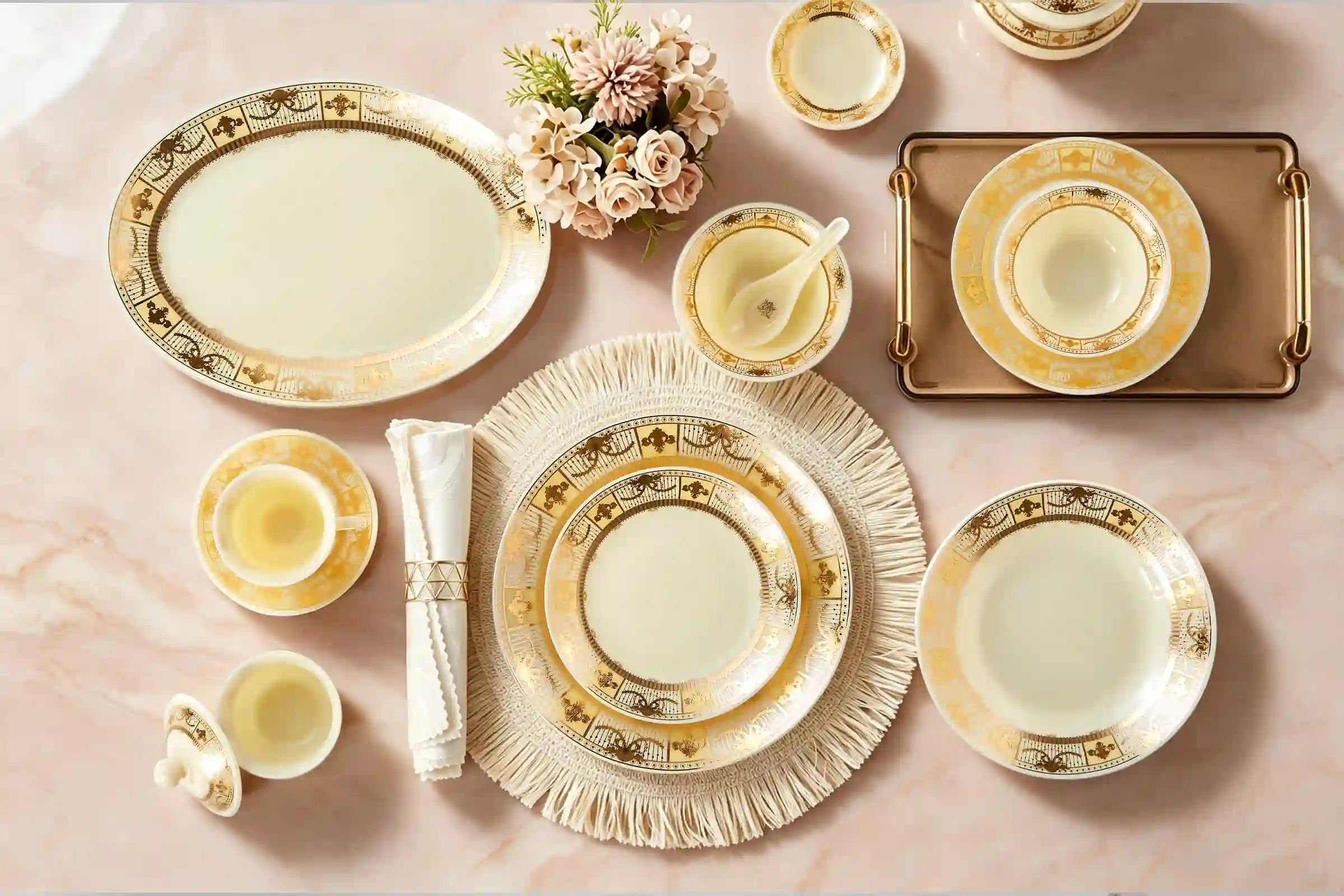
White Jade Suits a Simple, Versatile Table
White Jade dinnerware suits households that often change their table setting. It looks soft with a wooden tabletop and beige placemats. Switch to a dark gray tablecloth, and the outline of each piece becomes clearer. When colorful vegetables, fruit, and main dishes are served, White Jade allows the food to become the natural visual focus.
Its main advantage is versatility. The table, tablecloth, and food do not all need to be recolored around the dinnerware because White Jade settles quietly into the setting. This is particularly useful for everyday meals, when the dishes change from one day to the next and White Jade is unlikely to clash with any one of them.
During manufacturer sample approval, White Jade is often viewed beside several different backgrounds. Against pure white, its color appears lighter. Beside a dark tabletop, its edges and sheen become more noticeable. Shoppers can use the same method when choosing a set. Instead of relying only on product images shot against a white background, look for photos showing the dinnerware on a real table.
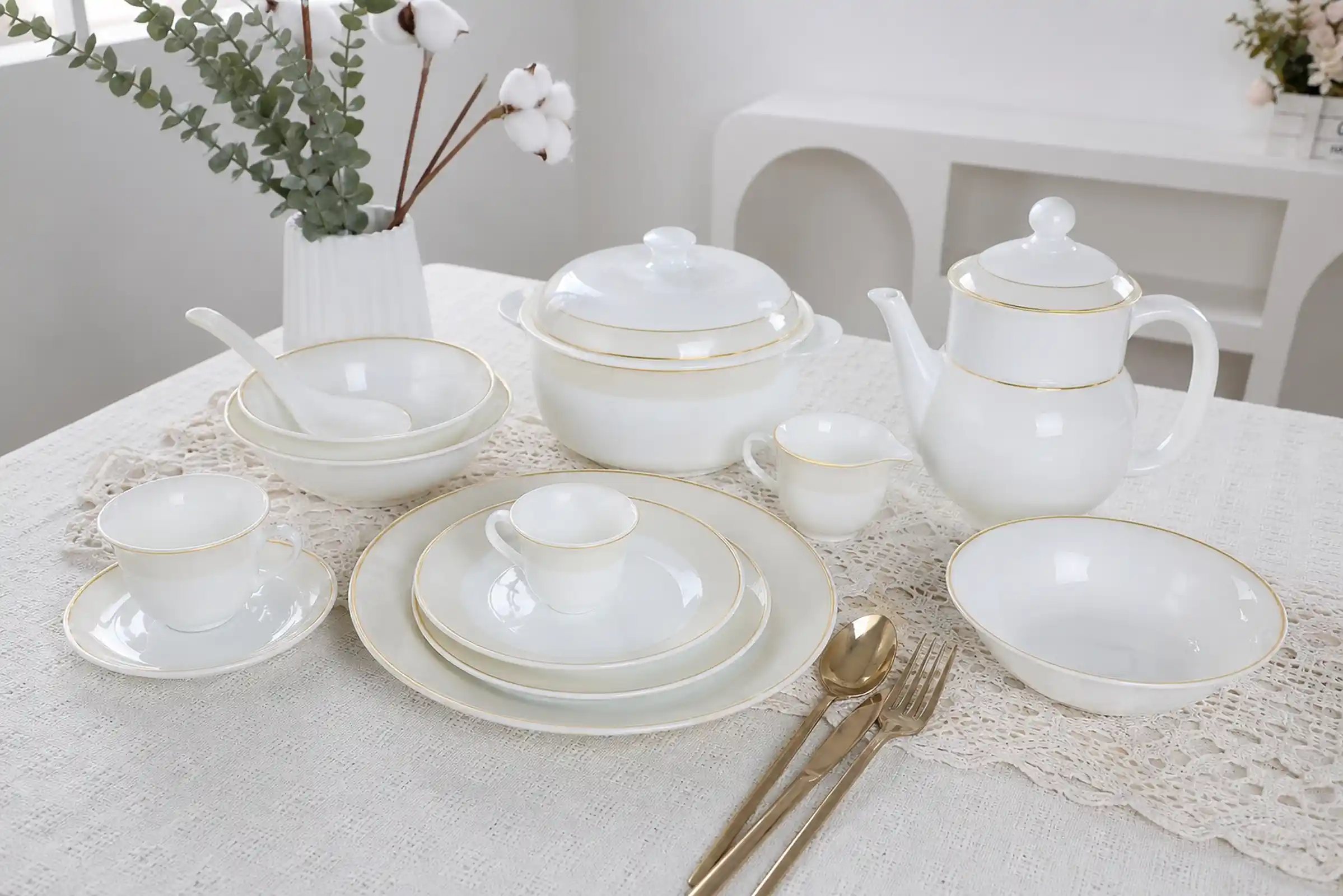
All of the products above belong to the JOINTION brand (JC Tableware manufacturer). If you are interested in the specific colors and series of these products, you can explore more of our colored tableware series to learn about their colors and styles.
Which Dinnerware Color Works Best for Everyday Meals and Family Gatherings?
Dinnerware used every day has a different role from dinnerware brought out for a holiday gathering. An everyday table should feel comfortable to look at, while a family gathering can carry more warmth and a clearer visual focus. With the right color, the mood of the table can change naturally without having to rearrange everything each day.
White Jade or Green Jade Is Easier on the Eye for Everyday Meals
On a busy morning, the table may hold only a few slices of bread, a cup of coffee, and some fruit. By evening, it may be set with rice, soup, and several home-cooked dishes. Dinnerware changes with the food every day, and a very strong color can make the table feel crowded. White Jade and Green Jade have a more moderate presence, making them better suited to long-term everyday use.
White Jade gives breakfast a crisp, uncluttered look, while Green Jade adds a natural touch to a wooden tabletop. Neither color limits the choice of food. A light meal one day and a more colorful selection the next can still look well coordinated.
The following points can help with the choice:
- If the kitchen and dining table are mainly light in color, White Jade will maintain a more unified look.
- If the table is natural wood and the home contains plenty of green plants, Green Jade will echo those surroundings.
- If the food already contains many colors, White Jade will steady the overall arrangement.
- If everyday meals tend to be light and simple, Green Jade will add a gentle natural variation.
Here, easier on the eye refers to lasting visual comfort. It does not describe the physical durability of the dinnerware. Cleaning and usage requirements should still be checked in the product instructions before purchase.
Yellow Jade Makes Family Gatherings Feel Warmer
At a family gathering, several shared dishes are usually placed on the table while everyone serves food and talks. People also tend to remain at the table longer. The warm tone of Yellow Jade makes a light tablecloth feel less empty, gives the center of the table a clearer focus, and strengthens the sense of everyone sitting together.
A white tablecloth makes Yellow Jade stand out more clearly, while warm lighting brings its sense of warmth closer. To keep the table from becoming overloaded with color, use white napkins, clear glasses, or a few white side plates, allowing Yellow Jade to remain the main color. The setting will feel lively without getting in the way of serving food or conversation.
For an ordinary family meal, Yellow Jade does not need elaborate decorations. The color of the dinnerware, several hot dishes, and some open space on the table are enough to make the meal feel thoughtfully prepared. It suits families who want a festive touch without making the table overly formal.
How Should Jade-Colored Opal Glass Dinnerware Be Paired with the Table, Tablecloth, and Food?
The key to coordinating color is giving the table one clear visual focus. When the table, tablecloth, dinnerware, and food all compete for attention, the eye has nowhere to rest. Choosing one main color and connecting it with light or natural tones usually creates a more comfortable family table.
Pair Green Jade Dinnerware with a Wooden Table and Beige Tablecloth
Green Jade, natural wood, and beige flow easily from one color to the next. A wooden table provides warmth, Green Jade adds freshness, and a beige tablecloth connects the two. In the afternoon, good daylight keeps the table from looking cold. In the evening, a soft lamp prevents the colors from feeling too heavy in the room.
Vegetables, salads, bread, and naturally colored home-cooked dishes all work well here. Beside Green Jade dinnerware, the food is supported rather than overshadowed. If the tabletop is dark, choose a lighter beige tablecloth so the outline of the dinnerware remains clear.
| Design Element | Role on the Table |
|---|---|
| Wooden dining table | Adds a warm foundation to the setting |
| Green Jade dinnerware | Introduces a fresh change of color |
| Beige tablecloth | Softens the color contrast and brings the table together |
This combination works for everyday dinners and for families who want to take their time over a weekend meal.
Pair Yellow Jade Dinnerware with a White Tablecloth and Warm-Toned Food
Yellow Jade looks brighter on a white tablecloth. The cloth acts as a clean background that brings the dinnerware’s warm color forward. Dishes such as roast meat, bread, pumpkin, or curry add the feeling of hot food freshly brought to the table. Once the family sits down, attention naturally settles near the center.
The important point here is to limit the number of colors. Yellow Jade and warm-toned dishes already create enough atmosphere, so napkins and glasses can be white, clear, or light gray. These neutral elements give the table breathing room, make the food look more distinct, and prevent the entire setting from blending into similar shades of yellow.
This combination is well suited to weekend dinners and holiday gatherings. The dinnerware already brings warmth to the table, so fewer decorations are needed and more room can be left for the food and the people sharing it.
Pair White Jade Dinnerware with a Dark Tablecloth and Colorful Food
White Jade creates a clear light-and-dark contrast with a dark gray, navy, or deep green tablecloth. The outline of the dinnerware becomes more defined, while colorful vegetables, fruit, and main dishes are easier to see. White Jade that might seem ordinary elsewhere has a stronger presence on a dark table.
This pairing also works in homes where a light-colored dining table lacks visual depth. The dark tablecloth frames the setting, White Jade keeps it clean, and the food introduces red, green, orange, and other colors. Each element has its place, so the table can look rich without being filled with objects.
On a smaller dining table, avoid adding too many dark decorative pieces to the dark tablecloth. Some open space will keep the White Jade dinnerware and the colors of the food clear, while also making it easier to serve and share dishes.
How Should Opal Glass Dinnerware Be Arranged for Different Family Dining Occasions?
The same dinnerware set can feel completely different in the morning and evening. Breakfast benefits from a lighter setting, weekend dinner can move at a slower pace, and a holiday gathering calls for more warmth at the table. Adjusting the color to suit the time and number of diners fits family life better than repeating the same arrangement for every meal.
Use a Small Number of White Jade Pieces for a Fresh Breakfast Table
Breakfast rarely calls for a full dinnerware set. A few slices of bread, a cup of coffee, and some fruit, served with a White Jade plate and cup, are enough to make the table feel complete. The clean color of White Jade brings out the colors of breakfast food and gives the room a lighter feel in the morning.
Using only a few pieces matters. Set out the plates, cups, and utensils that are genuinely needed that morning, and the table will retain enough open space. Food is easier for the family to reach, and clearing up after breakfast is simpler.
A breakfast setting can stay simple:
- Use White Jade plates for bread, fruit, or a simple breakfast staple.
- Choose light-colored placemats to keep the table bright.
- Use fewer decorations so the dinnerware and food remain at the center of attention.
The result does not look overly arranged, yet it gives a hurried breakfast a little more freshness and order.
Green Jade Dinnerware Gives Weekend Dinner a More Natural Feel
Weekend dinner usually moves at a slower pace. Once the food is ready, the family may linger and talk at the table instead of rushing to finish. Green Jade dinnerware fits that rhythm. It introduces color without feeling as lively as dinnerware chosen for a holiday gathering.
Paired with a wooden tabletop, beige tablecloth, and soft lighting, Green Jade connects the natural elements across the table. A few home-cooked dishes, a simple soup, and one dinnerware set are enough to make the meal feel different from a weekday dinner. Yellow Jade is brighter and White Jade feels crisper, while Green Jade has a more relaxing presence.
When manufacturers approve dinnerware colors, they often examine samples under both natural and warm light. Green Jade looks fresher in daylight and slightly softer under warm light. At home, tablecloths can be adjusted for daytime and evening lighting so the color remains balanced in both settings.
Yellow Jade Dinnerware Makes Holiday Gatherings Feel More Festive
Holiday gatherings bring more people and more food to the table. Once a white or light-colored tablecloth is laid out, completely colorless dinnerware can leave the table looking a little empty. Yellow Jade adds a bright, warm area at the center and gives the setting a more celebratory feel.
A white tablecloth, a small number of warm-toned napkins, and several shared dishes are enough for the basic arrangement. If flowers or other decorations are already on the table, keep their colors restrained so every element does not compete for attention. A holiday table should feel lively, while still leaving practical room for serving food, talking, and placing dishes.
In this setting, Yellow Jade works best as the warm center of the table. It gives the arrangement a clearer focus and adds a sense of occasion to an ordinary gathering without taking away the ease and practicality expected from a family meal.
Conclusion
Changing the atmosphere of a family meal with opal glass dinnerware often begins with the color of the set. Green Jade on a wooden tabletop suits natural, relaxed everyday dinners. Yellow Jade with a light-colored tablecloth works well when the family gathers or celebrates a holiday. White Jade adapts to breakfast, home-cooked food, and table settings that change often. Once the color is chosen, consider the tablecloth, food, and lighting, and the table will gradually develop a look that suits the home. When choosing Jointion opal glass dinnerware, it is helpful to view the color on a real tabletop, especially under both natural and warm light. Looking good on its own is only the first step. The more useful result is dinnerware that still looks right once it becomes part of the home’s dining setting.