
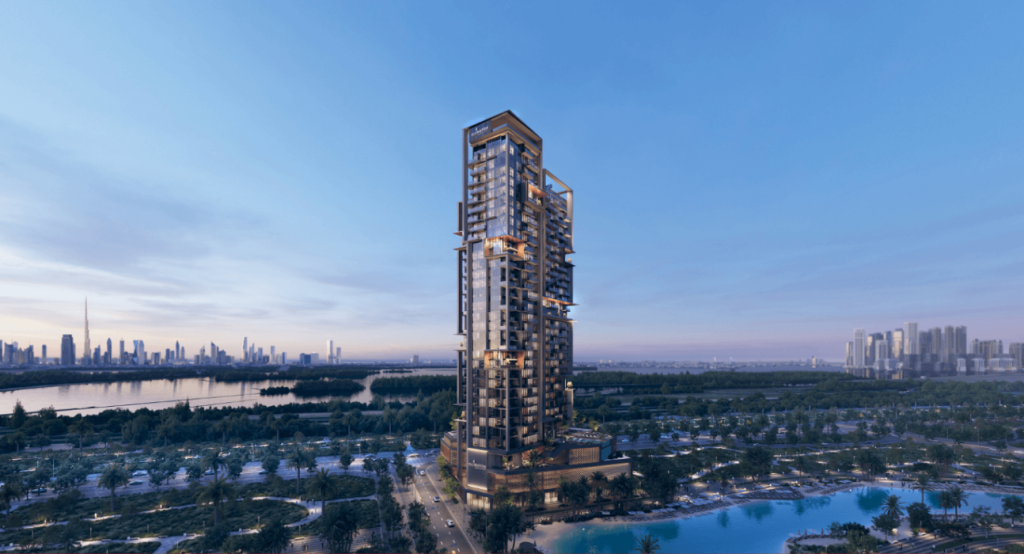
In Dubai, off-plan property investment has been a significant change to the real estate industry. They have changed the way projects are funded, the sharing of risks and the generation of profits. In comparison to ready-built assets, off-plan properties bring flexibility and accessibility way before completion.
This model changes the dynamics between developers and investors – transforming the real estate market from a stagnant buy-sell loop to a dynamic ecosystem of partnerships. We will discuss in this blog how new off plan projects in Dubai change the nature of financing, risk management, timelines, and monetisation, and how it is unlike normal built properties.
Understanding Off-Plan Property Investments
Off-plan property is bought prior to or during construction of the building, according to plans, renderings, and the credibility of the developer. One of the benefits of investing in Dubai off-plan properties is the potential for early capital appreciation, especially as the property market in Dubai continues to grow.”
Key Highlights
- Early purchase at a lower cost.
- Attainable installment payment plans.
- The developers have upfront construction finance.
- The investors have the advantage of capital appreciation prior to completion.
Financing: How the Model Has Shifted
Conventional real estate was based on bank mortgages and lump-sum payments. Off-plan projects, on the other hand, brought about developer-based financing whereby payments are pegged to project milestones.
Flexible Off-Plan Payment Models
- Instalment Plans: Payments over construction stages (e.g. 60/40 or 70/30).
- Post-Handover Plans: There are developers who make payments after delivery.
- Minor Booking Amounts: Investors will be able to book units at low start-up fees.
The new structure makes the banks less dependent, and it makes real estate accessible to more investors and foreign buyers.
Financing: Off-Plan vs. Built Assets
| Factor | Off-Plan Property | Ready-Built Asset |
| Payment Type | Developer-led instalments | Bank mortgage or full cash |
| Accessibility | Easier for mid-level investors | Requires full financial readiness |
| Financial Risk | Shared between investor & developer | Primarily on the buyer |
| Capital Leverage | Early-stage funding creates liquidity | Fixed value, limited leverage |
Risk Allocation: Common Responsibility
The risks are also evenly shared among the developer and the investor in off-plan models, compared to build assets, where most of the risks are taken by the buyers after purchasing the asset.
Who Faces What
- Developers: Manage the construction, compliance with regulations, and quality assurance.
- Investors: Expose themselves to market volatility and liquidity risk prior to handover.
The regulatory bodies in Dubai, particularly RERA, mitigate such risks using escrow accounts, where developers are paid only after achieving construction milestones.
| Risk Factor | Off-Plan Property | Ready-Built Asset |
| Construction Risk | Developer’s responsibility | None (already complete) |
| Market Risk | Shared (during project) | Buyer after purchase |
| Payment Security | Protected via escrow accounts | Immediate ownership risk |
| Transparency | Regulated progress reporting | Dependent on market data |
Timelines: Flexibility Over Instant Ownership
Timelines determine the operation of off-plan and built assets in different ways.
Off-plan projects are due to the staged construction and payment, whereas ready properties are instant to give handover, however, not very flexible.
Benefits of Off-Plan Timelines
- Financing can be done within a number of years.
- The developers sustain a steady cash flow.
- The advantage of appreciation in construction goes to early buyers.
- Projects create an unending demand before completion.
| Element | Off-Plan Property | Ready-Built Asset |
| Ownership Timing | Post-construction | Immediate |
| Payment Period | Spread across 2–5 years | One-time or short-term |
| Value Growth | Gradual during build | Stable after purchase |
| Market Dynamics | Long-term participation | Short-term possession |
Monetisation: Redefining How Returns Are Earned
Off-plan models provide many alternatives for generating returns before and after completion. This renders them more flexible as compared to the built assets, which depend on rental incomes or resale as their primary sources.
Investor Earning Options
Pre-Handover Resales: Sell before completion for capital gain.
Post-Handover Rentals: Get long-term income from finished units.
Capital Appreciation: Gain with an increase in demand as the building progresses.
Developer Advantages
- Projects that are under operation are funded by early sales.
- New launches are maintained by continuous engagement with investors.
- Profit cycles are repeated without having to finish.
| Factor | Off-Plan Property | Ready-Built Asset |
| Profit Timeline | Starts during construction | Begins after purchase |
| Liquidity | High (resale before completion) | Lower (requires sale or rent) |
| Investor Strategy | Short- and long-term gains | Mostly long-term |
| Developer Profit | Ongoing through project stages | One-time upon sale |
How Off-Plan Investments Reshape the Real Estate Model
Off-plan investments have transformed real estate into a participatory and not static ownership industry.
They bring together investment accessibility, shared responsibility and perpetual liquidity – changing the way that the market works.
Core Shifts Introduced
- Developers are money lenders and constructors.
- Early access to prime assets is flexible for investors.
- Security and transparency are guaranteed by regulation.
- The construction cycle is still in motion with the cash flow.
All these contribute to an ecosystem that is sustainable and innovative, and is able to adapt to new economic and investor requirements.
Closing In!
Off-plan real estate investments have reinvented the construction, financing and monetising of real estate. They bring about flexibility, transparency, and balanced risk as compared to the ready-built assets. The developers are now in charge of the financial and operational responsibility, and investors have more availability and profit potential.
This changing model has transformed Dubai into a smart investment hub in the world. The off-plan projects not only construct homes, but also build the prospects of partnership, creativity and development. To future-oriented investors, this is the business model that will be the future of real estate.