
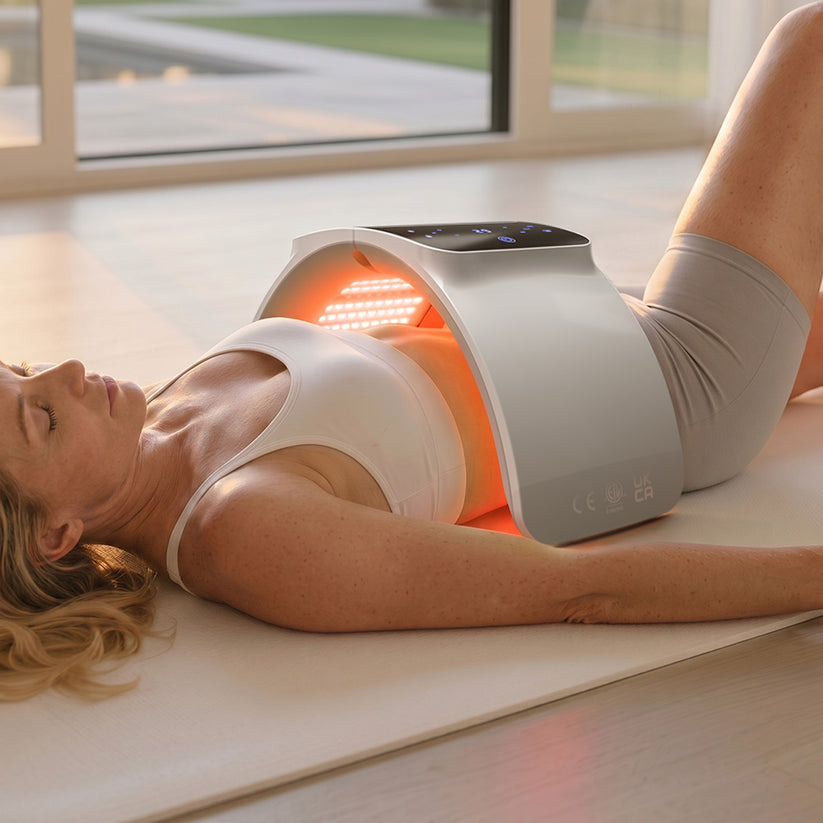
Most people meet this modality in a treatment room. A practitioner books a course of sessions, the equipment is larger than anything sold for home use, and the results arrive under supervision. Somewhere around the fourth or fifth appointment, a reasonable question surfaces: given what a full course costs in money and in afternoons, would owning a device make more sense than continuing to drive across town for something that takes twenty minutes?
The answer is genuinely situational, and the honest version is more interesting than either side of the usual marketing argument. Clinics offer real advantages that home devices cannot replicate, and home devices offer a structural advantage that no clinic can match. Which one matters more depends on what the user is treating, how disciplined they are without external accountability, and whether their goal responds better to occasional high-intensity exposure or to frequent modest exposure. This piece works through the trade in both directions and ends with a practical way to decide rather than a recommendation dressed up as analysis.
What a Clinic Course Genuinely Provides
The first thing a clinic sells is not equipment access. It is judgment. A practitioner who has run hundreds of courses knows which presentations respond quickly, which need a longer horizon, and which are not appropriate for the modality at all. That filtering happens in the first consultation and it saves some people from spending months on an approach that was never going to address their actual problem.
The second thing is protocol design. Someone evaluating photon led light therapy for the first time has to make decisions about wavelength selection, session duration, spacing between sessions, and how long to persist before judging the outcome. In a clinic those decisions are made by someone else. At home they become the user’s responsibility, and getting them wrong is the most common reason home protocols underperform the clinic sessions that inspired them.
Accountability That Nobody Budgets For
A booked appointment gets attended. A device sitting in a spare room gets used enthusiastically for three weeks and then intermittently. This is not a character flaw; it is how most home health equipment behaves. Anyone deciding between the two options should be honest about which category they fall into, because a clinic course completed in full will beat a home device used twice a month regardless of the underlying hardware.
The Costs That Do Not Appear on the Invoice
Against that, a clinic course carries overhead the invoice never shows. Travel each way, parking, the awkward gap between the appointment and whatever came before it, and the rescheduling friction when work runs long. A twenty-minute session frequently consumes ninety minutes of a day. Multiply that across a twelve-session course and the real cost of the modality looks different from the quoted price.
Where Home Devices Win: Cadence and Friction
The structural advantage of ownership is that the marginal cost of one more session approaches zero. This changes what protocols become possible. Clinic courses are typically spaced once or twice weekly because that is what scheduling and pricing permit, not because that is the physiologically optimal cadence. Many applications respond better to short, frequent exposure than to longer sessions spaced further apart.
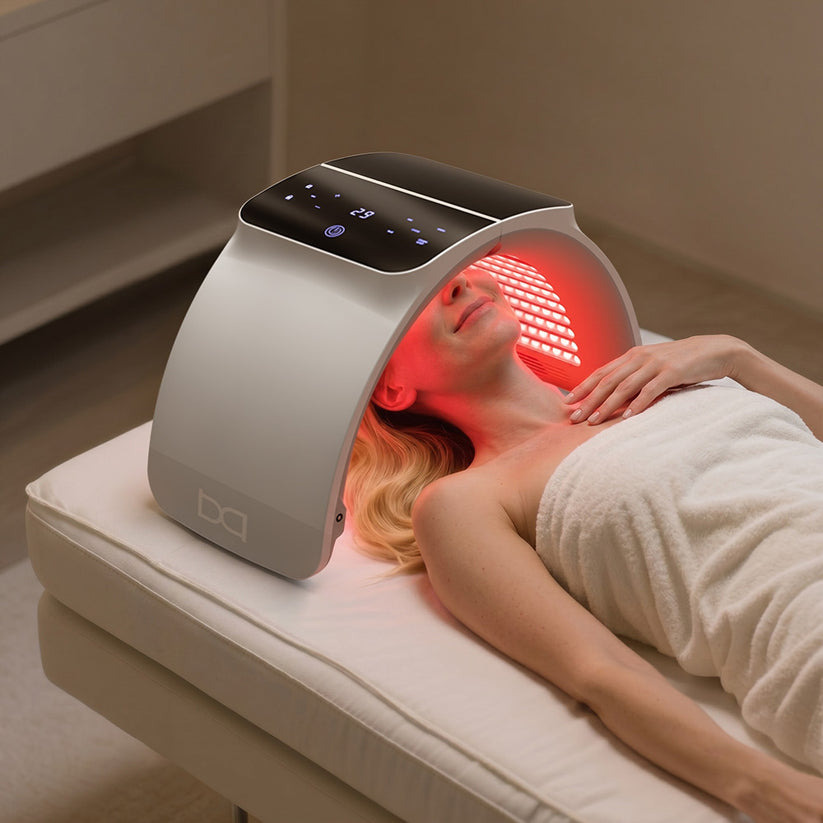
Skin-directed goals illustrate this clearly. Changes in tone and texture emerge from cumulative exposure across weeks and months, and a pattern of brief near-daily sessions delivers that cumulative load more effectively than eight clinic visits ever could. Someone whose primary interest sits in this category is trading a small amount of intensity per session for a large increase in total sessions, and that trade usually favors ownership.
Sessions That Fit Between Other Things
The practical version of this advantage is mundane. A ten-minute session while coffee brews, or during the last part of an evening routine, costs essentially nothing and therefore happens. Once the session no longer requires a decision, compliance stops being a problem. This is the mechanism behind most successful home protocols, and it is not available at any price from a clinic.
Control Over Timing and Duration
Ownership also removes the constraint of fitting a protocol to someone else’s calendar. A clinic session happens when the appointment was available, which may be a Tuesday morning three days after the training session it was meant to support. At home, timing can follow the actual need: after a hard workout rather than four days later, or in the evening for goals that seem to respond better to that slot. This flexibility is difficult to quantify but it is the difference between a protocol built around physiology and one built around a booking system.
Consistency Outperforms Intensity Across a Quarter
Over a three-month horizon, the user who managed four modest sessions per week has almost always delivered more total useful exposure than the user who completed a professionally supervised course and then stopped. The clinic course produces a faster initial response; the home protocol produces a larger cumulative one. Goals that plateau without maintenance favor the second pattern strongly.
The Trade-Offs Nobody Mentions
Home ownership transfers two responsibilities that clinics absorb invisibly, and both deserve consideration before buying rather than after.
Designing Your Own Protocol
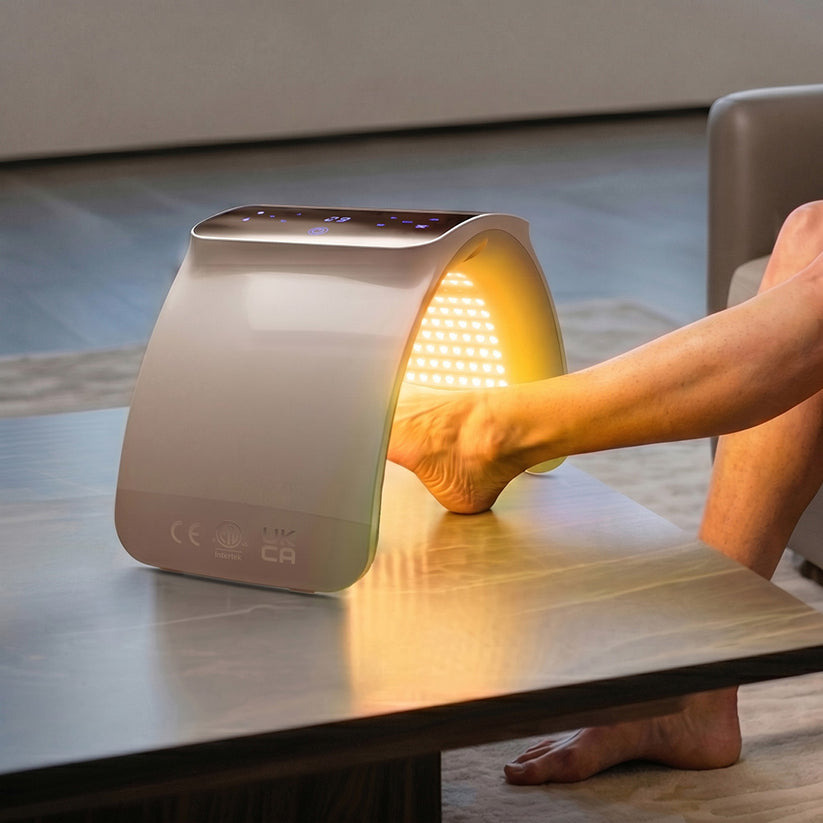
The first is protocol design. Without a practitioner, the user has to pick a starting point and hold it long enough to evaluate. The workable approach is to choose conservative parameters, keep them fixed for six to eight weeks, and change exactly one variable if results stall. Users who adjust duration, distance, and frequency simultaneously every fortnight generate a great deal of activity and no interpretable information about what actually helped.
Judging Equipment Without Help
The second is evaluating hardware. Clinic equipment was chosen by someone with a professional stake in it working. At home, the buyer becomes the evaluator, which means learning to read irradiance figures at a stated working distance rather than at the emitter surface, and treating wavelength claims as verifiable specifications rather than descriptive language. Manufacturers that publish measurement conditions alongside their numbers, as BestQool does, make this comparison possible; those that publish bare figures without conditions make it meaningless.
The Discipline Problem Is Real
The third transferred responsibility is the one buyers underestimate most consistently. Nobody is waiting for you, nobody notices a missed week, and there is no sunk cost pressing you into the room. The countermeasures are unremarkable and effective: attach the session to an existing daily habit rather than a time of day, keep the device somewhere that requires no setup, and log sessions somewhere visible. A protocol that depends on motivation will fail in the second month. One that depends on a trigger already embedded in the day tends to survive.
A Practical Way to Decide
The decision does not have to be made in the abstract, and treating it as a one-time either-or choice is what makes it feel difficult.
Use a Short Clinic Trial as Reconnaissance
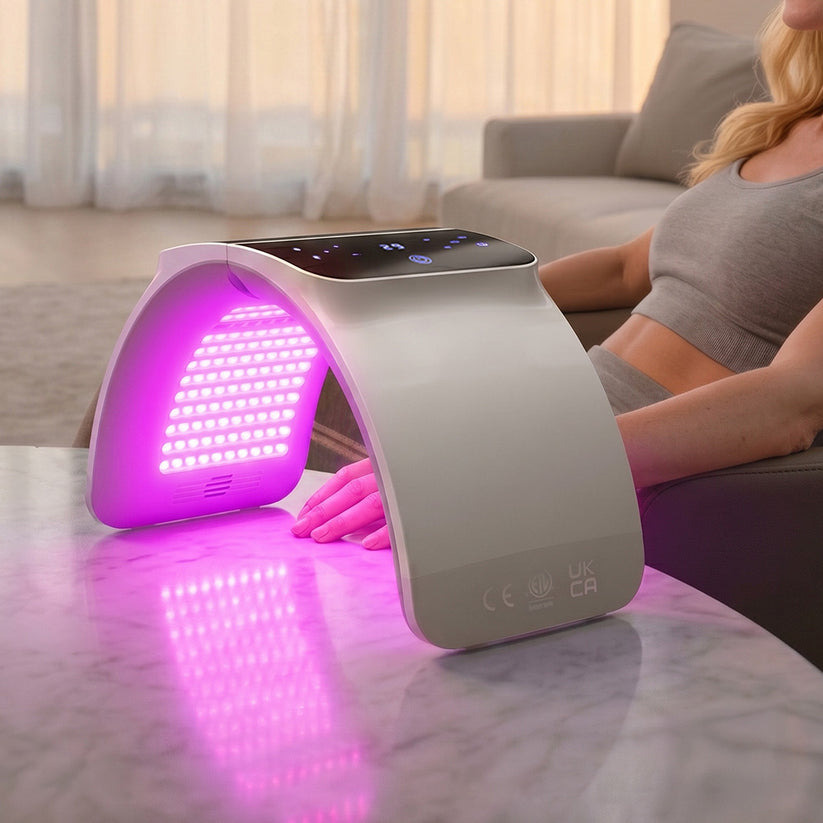
A brief supervised course answers the questions that matter most before any equipment is purchased: does this presentation respond at all, roughly how quickly, and what parameters did a professional consider appropriate. That information converts an uncertain purchase into an informed one. Buyers who skip this step and buy first are often left unable to tell whether a disappointing outcome reflects the device, the protocol, or a goal that was never a good fit.
Running Both Without Duplicating Cost
The two options are not mutually exclusive after the initial decision either. A useful long-term pattern uses a home device for routine maintenance and books an occasional clinic session when progress stalls or the goal changes, treating the practitioner as a consultant rather than a service provider. This keeps the frequency advantage of ownership while preserving access to the judgment that is genuinely hard to replicate alone, and it costs far less than a repeated full course.
When Ownership Becomes the Obvious Answer
Three signals point clearly toward buying. The goal is chronic or maintenance-oriented rather than a single episode with an endpoint. The desired cadence exceeds what weekly appointments allow. More than one person in the household would use it. When two of those three apply, the arithmetic stops being close, and the remaining question is only which device to choose rather than whether to own one at all.
Choosing Between Supervision and Frequency
Clinics and home devices are not competing on the same axis, which is why the comparison usually gets framed badly. A clinic sells judgment, supervision, and the accountability of a booked appointment, and for a first encounter with the modality or an uncertain presentation, those are worth paying for. A home device sells frequency, and frequency is what most goals in this category actually require to produce lasting change. The sequence that serves most people best uses both: a short supervised course to establish whether the approach fits and what parameters make sense, then a home setup to deliver the cumulative exposure that weekly appointments cannot. Deciding on that basis avoids the two expensive errors, which are buying equipment for a goal that was never going to respond, and continuing to pay for appointments long after the useful information from them has been extracted.