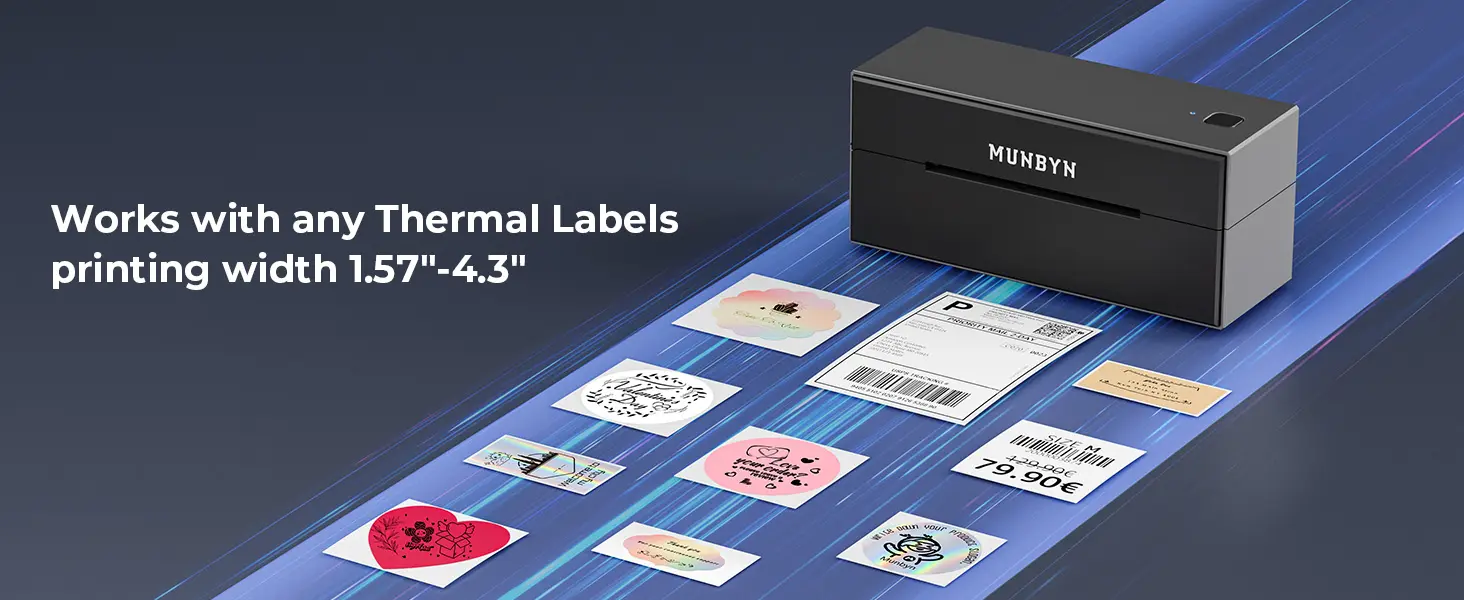
In a world where clarity and order matter more than ever, the humble label printer has quietly become an essential tool in homes, offices, and many types of workplaces. A label printer is a device that produces adhesive labels you can stick onto almost anything, from storage bins and cables to files and shelves. While that might sound simple at first glance, the practical impact of having clear, consistent labels reaches far beyond basic organization. In this article, we’ll explore what label printers do, why they matter, and how they’re used across various settings.
What a Label Printer Does
At its core, a label printer prints text, barcodes, and even simple graphics on pre-sized stickers. These stickers can be made of paper, plastic, or other materials, depending on where they’ll be used. Unlike a regular printer that prints on standard sheets of paper, a label printer uses rolls or tapes designed specifically for sticky labels. This specialization allows it to create durable, uniform, and legible results quickly and repeatedly.
The technology behind label printing has also evolved. Modern devices can connect to computers, smartphones, or tablets, allowing users to design labels with custom text, fonts, and even simple icons. Whether the goal is to mark the contents of storage boxes in a garage or streamline the identification of components in a warehouse, label printers make it easier to generate exactly the labels you need.
Everyday Uses of Label Printers
Label printers are versatile. You’ll find them in places you might not immediately think of, and for good reason: clear labeling improves both functionality and communication.
1. Home Organization
For many households, a label printer becomes a go-to tool for tidying up kitchens, closets, and home offices. Creating labels for jars of spices, containers of craft supplies, or bins of seasonal decorations helps family members quickly locate what they need. Parents often find them especially useful for labeling school supplies or creating personalized name tags for kids’ belongings.
2. Offices and Workplaces
In professional settings, label printers help maintain order in shared spaces. They’re used to mark files, folders, shelves, and office equipment so that anyone can find things without confusion. In environments with lots of paperwork or shared resources, this kind of clarity reduces time wasted searching for items and keeps work flowing smoothly.
3. Retail and Inventory Management
In stores and warehouses, label printers play a vital role in inventory control. Labels printed with product information, stock-keeping units (SKUs), and barcodes help staff track items accurately. This reduces errors in shipping, receiving, and stocking shelves. When mistakes are minimized, both customer satisfaction and operational efficiency improve. In these contexts, you’ll often see brands like Munbyn appear in conversations about reliable devices suited for high-volume labeling tasks.
4. Healthcare and Laboratories
Accurate labeling is critical in healthcare environments, where misidentification can have serious consequences. Label printers are used to mark patient files, specimen containers, medication packages, and more. The ability to print clear, legible labels that can withstand sterilization processes or refrigeration conditions is crucial for safety and compliance.

Why Label Printers Matter
It’s easy to overlook something as simple as a sticker, but the impact of good labeling ripples outward in ways that touch efficiency, safety, and even stress levels.
Enhancing Efficiency
When items are clearly labeled, people spend less time guessing or searching. In a busy workplace, that saved time adds up. Organized systems allow employees to focus on meaningful tasks, rather than constant questions about where things belong or how they should be handled.
Reducing Errors
Clear labels help cut down on mistakes. In inventory systems, mislabeling can lead to costly errors in shipping or stock levels. In healthcare, a mislabeled sample might lead to incorrect test results. Label printers help ensure information is displayed consistently and accurately, lowering the chance of human error.
Supporting Accessibility
For many people, visual cues like labels make routines easier to manage. In homes with multiple family members, labels communicate non-verbally what belongs where. For people with memory challenges or learning differences, clear labeling can be especially helpful in maintaining independence.
Adapting to Different Needs
Label printers today are more flexible than ever. They can handle a range of materials and sizes, from small barcode labels to large tags for industrial use. Some machines are built for portability, enabling workers to print labels on the spot. Others support advanced connectivity, letting users design labels on a computer and send them straight to the printer.
Choosing the Right Device
When people talk about finding a label printer that suits their needs, brands like Munbyn are often mentioned for offering a variety of options. Some devices focus on compact design for home use, while others are built to handle tougher environments like warehouses and factories. What matters most is finding a tool that fits the volume and type of labeling you’ll be doing.
If you’re considering adding a label printer to your toolkit, think first about how often you’ll use it, where you’ll use it, and what kinds of labels you need. For occasional home organization, a basic machine might suffice. For business operations, a more robust model with faster printing speeds and connectivity to software systems could be worth the investment.
Final Thoughts
Label printers may seem like small, simple devices, but they play a big role in making everyday tasks more manageable. From organizing a cluttered pantry to managing inventory in a busy warehouse, these tools help people find what they need when they need it. They reduce errors, enhance communication, and bring structure to both work and life. Whether you’re new to label printing or looking to upgrade your setup, recognizing the value of clear, consistent labels can change the way you approach organization. Brands like Munbyn have contributed to making these devices more accessible and adaptable, but the real benefit comes from finding the right fit for your own environment.